Collection Center
2025
Design competition for the new Debrecen Collection Center for the Hungarian Museum of Natural History, 3rd place
Architects: Balázs Biri, Levente Szabó, Dávid Józsa, Eszter Mantuano, László Rátgéber
Co-designers: Dorka Jelinek, Szabolcs Dugár, Attila Erdei
Architectural concept
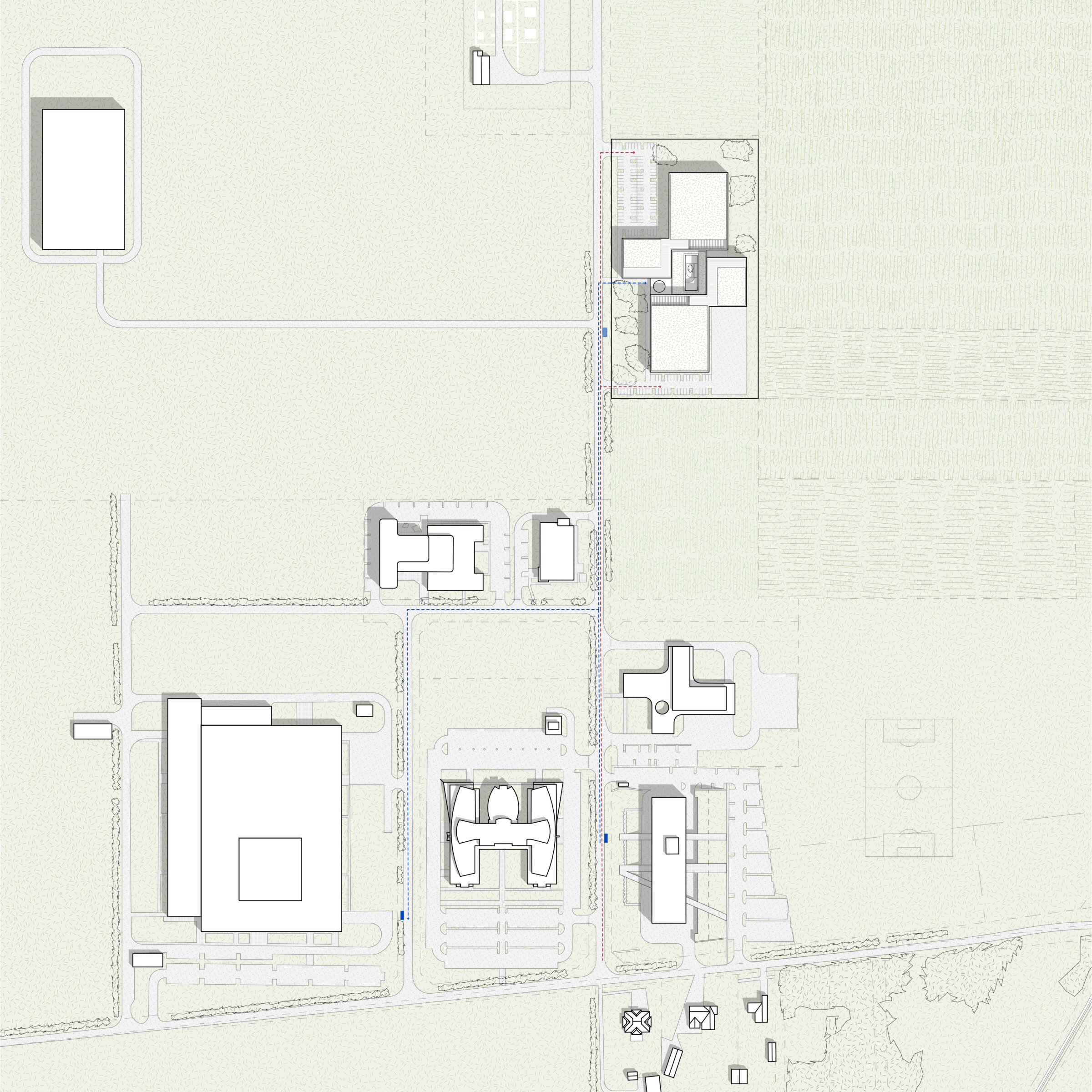
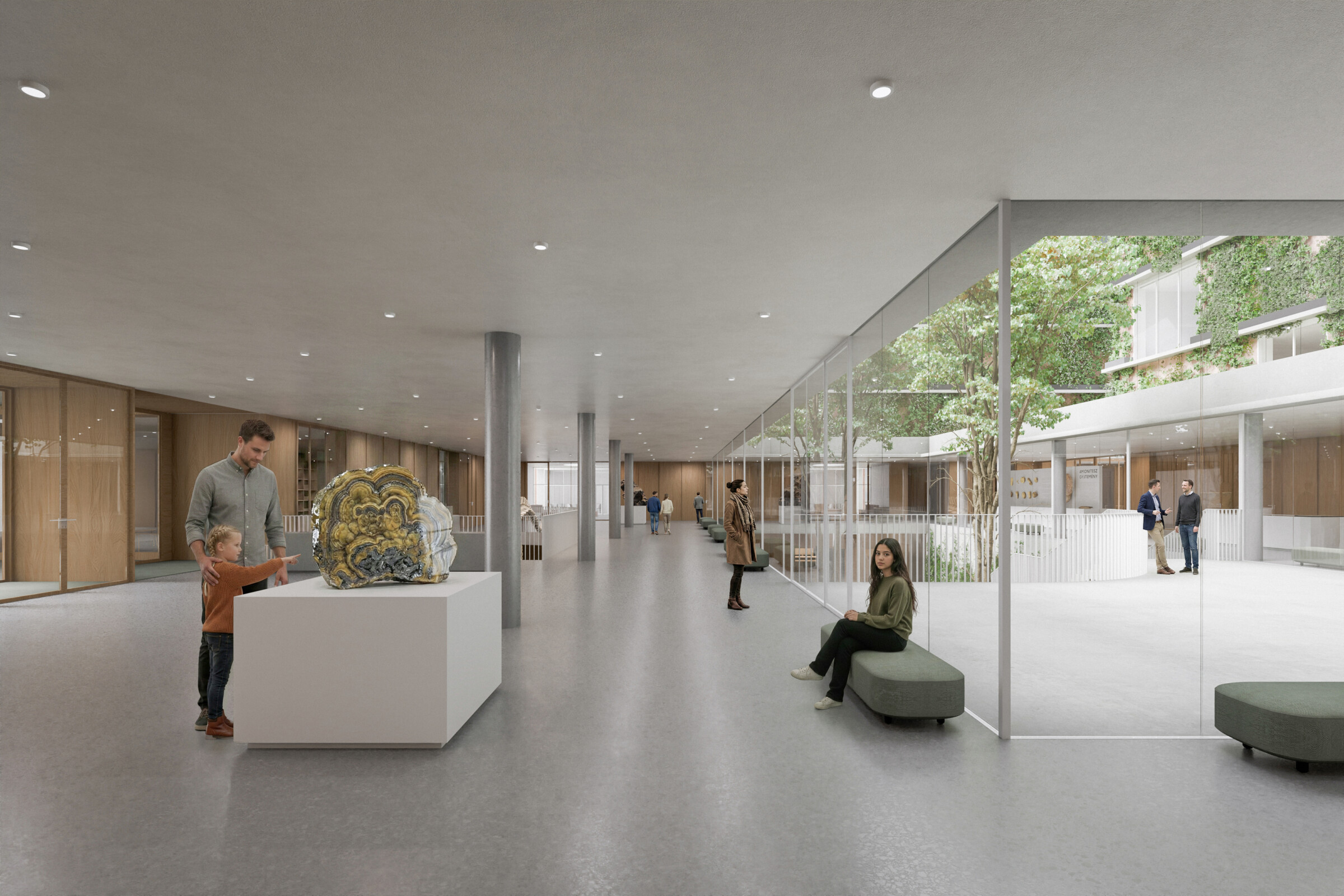
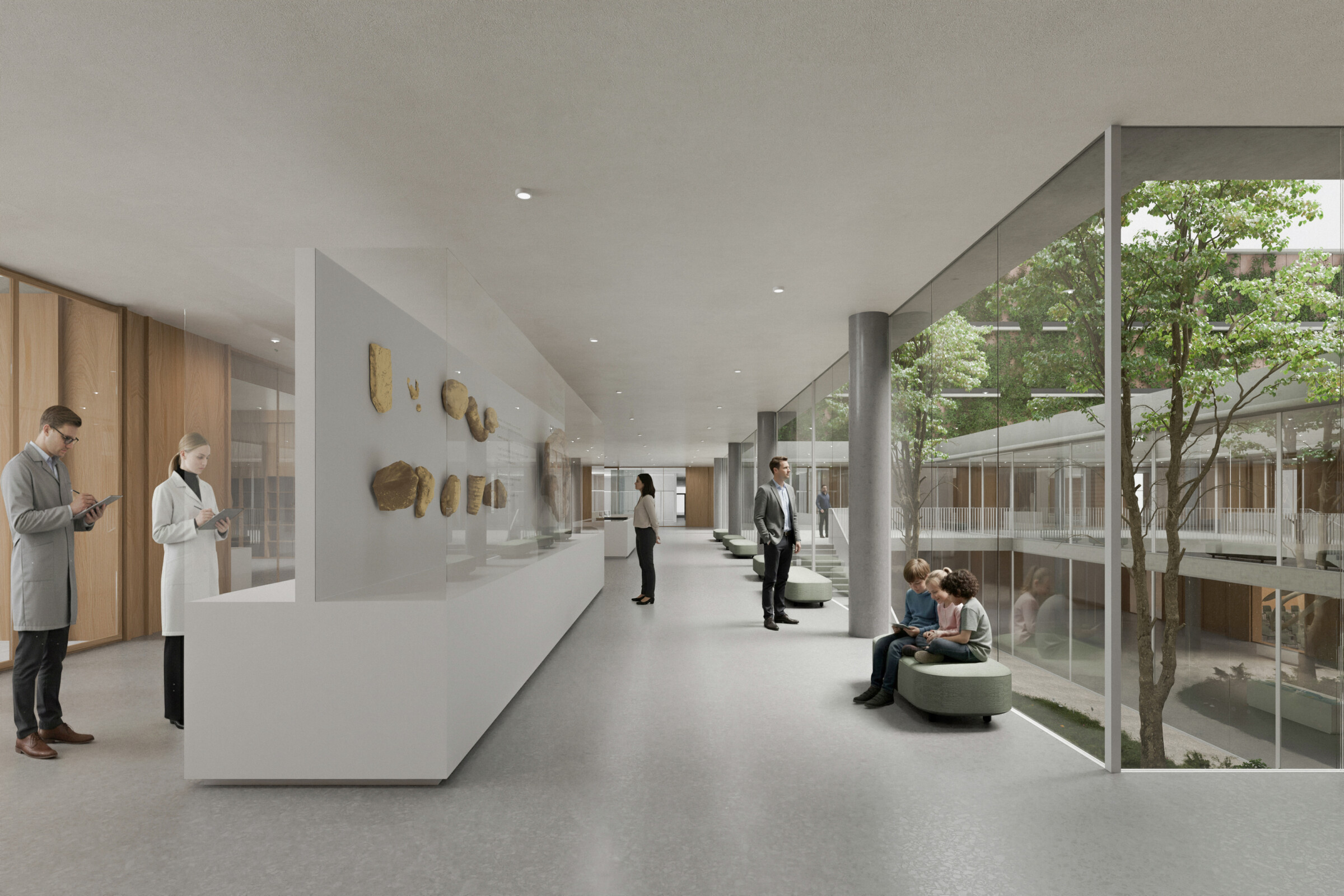
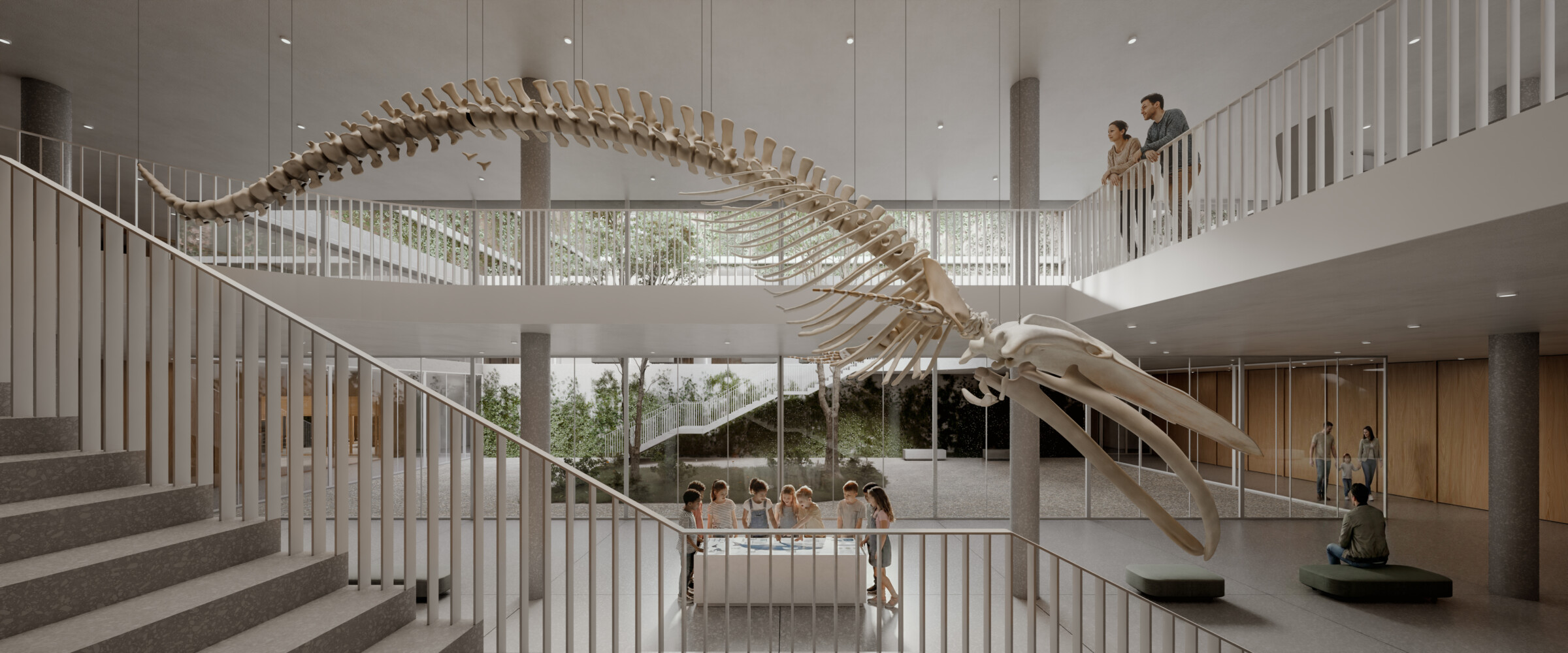
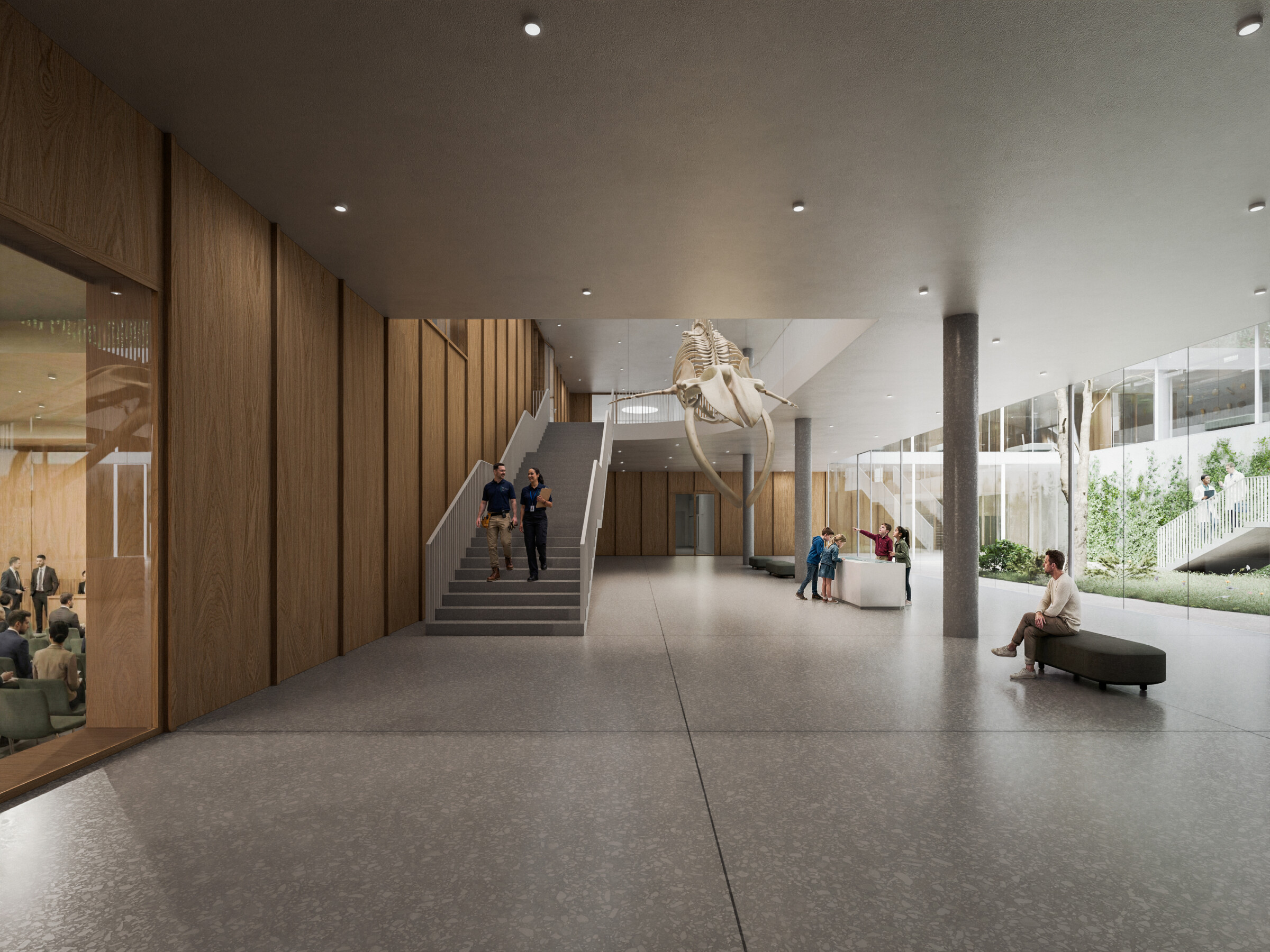
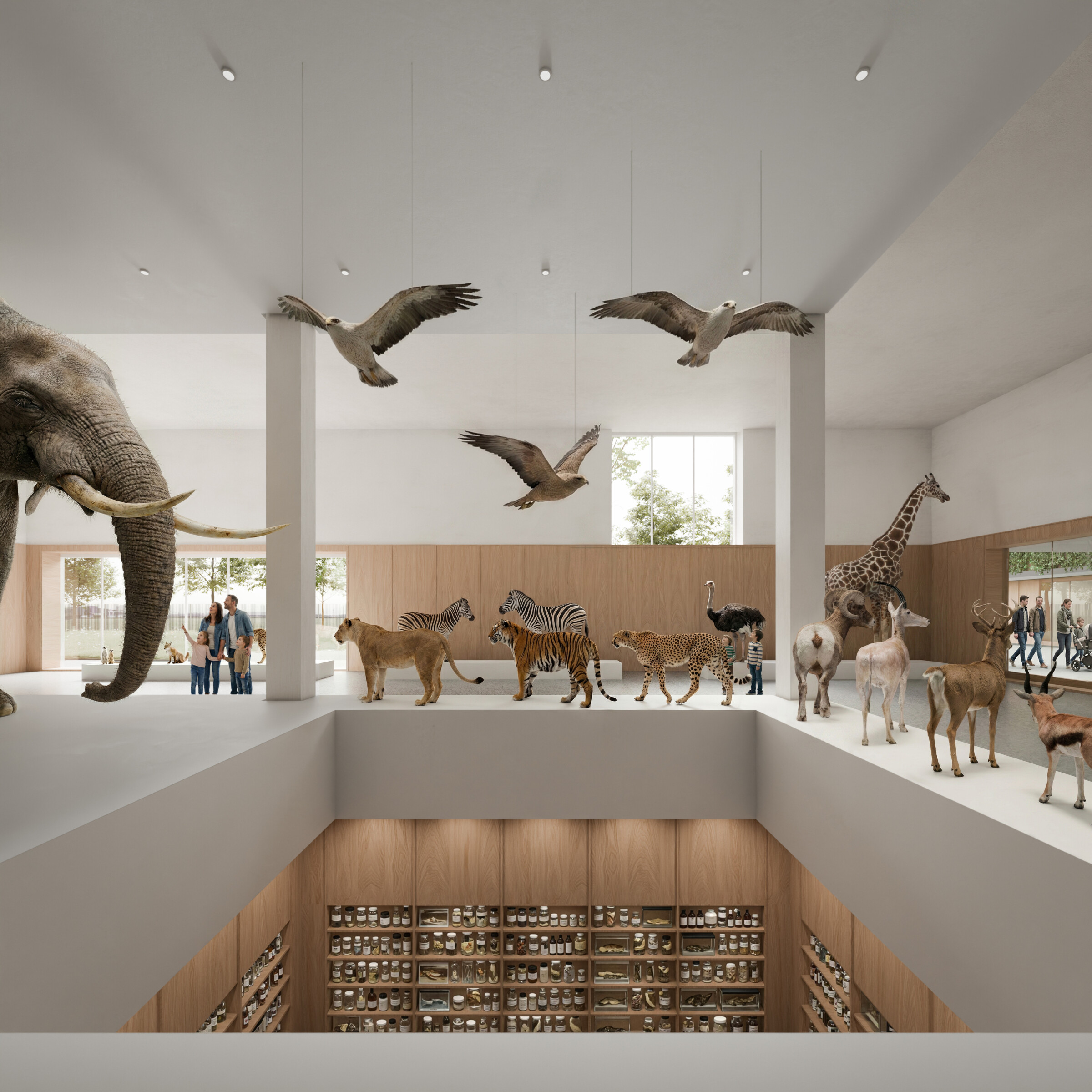
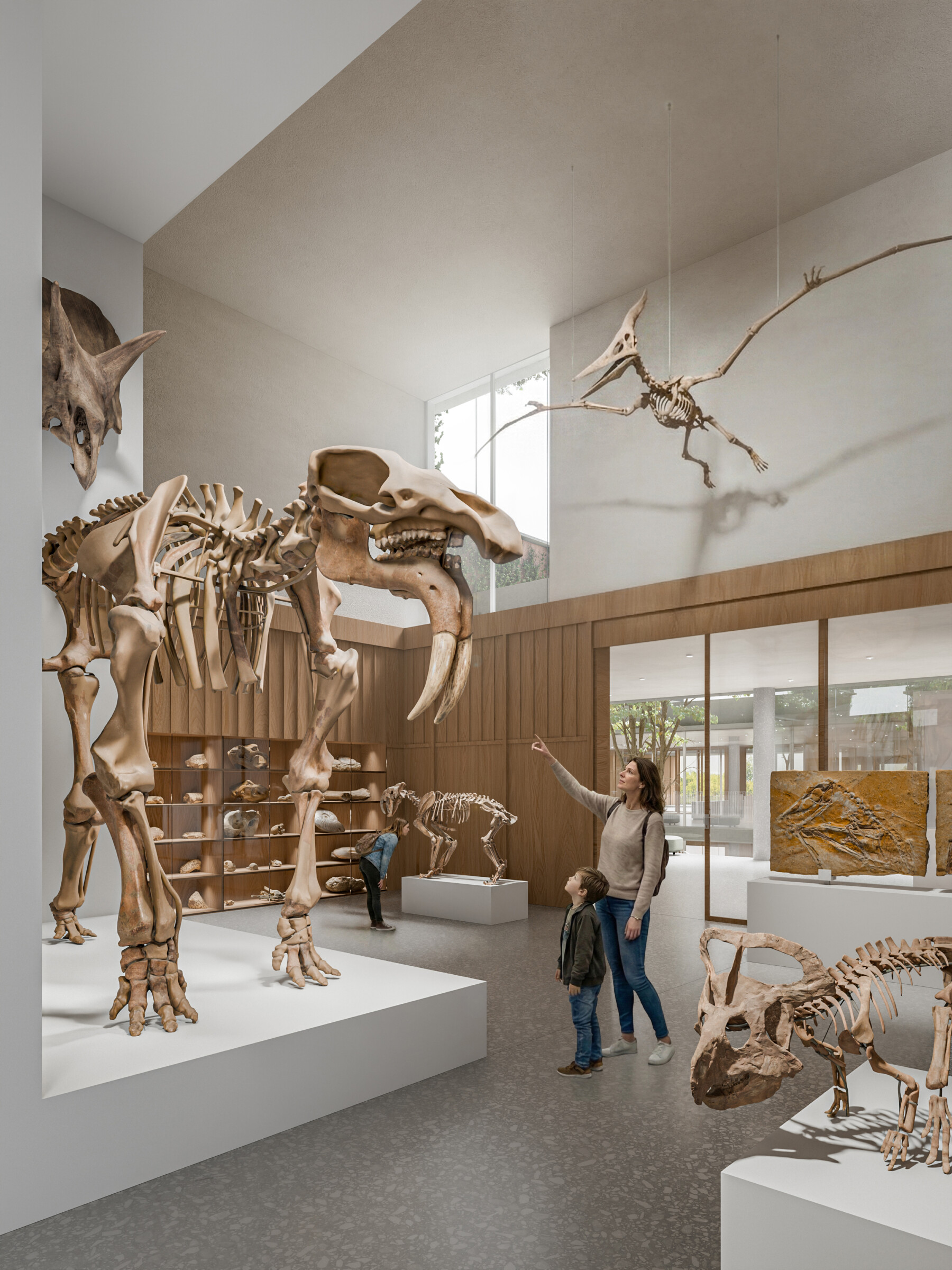
The planned Collection Center will be located next to the Exhibition Building in Debrecen’s Nagyerdő Park and will serve as a new base for natural science research. The collection, research, education, and digitization centers will all be concentrated in a single knowledge center. The new knowledge center will house the collection and related research, while the exhibition halls and various lecture halls will also open the institution to visitors. Thus, the planned building will essentially serve a dual function: it will be both a home for the collection and a research base, as well as an educational knowledge center open to outside visitors.
The basis of our architectural concept is that the building should be both a strictly organized, rational workplace and a series of spaces that professionally serve storage technology, while at the same time creating spectacular, exciting, and experiential spaces for visitors. We are convinced that this duality is what makes this institution special and even of regional significance, so the biggest challenge of the competition is to meet this dual use and to strike the right balance between the two uses.
We have summarized the fundamentals of our concept in the following key points:
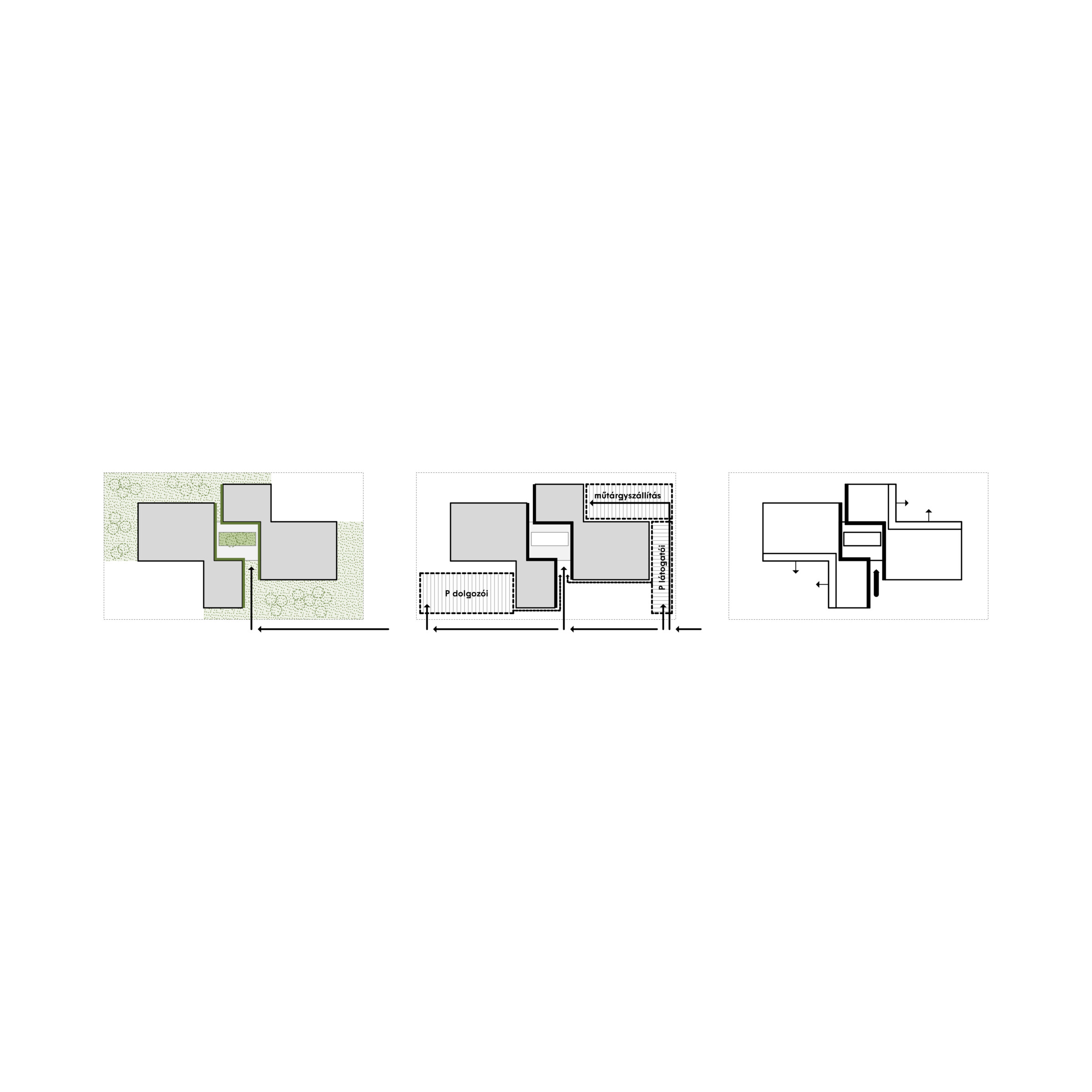
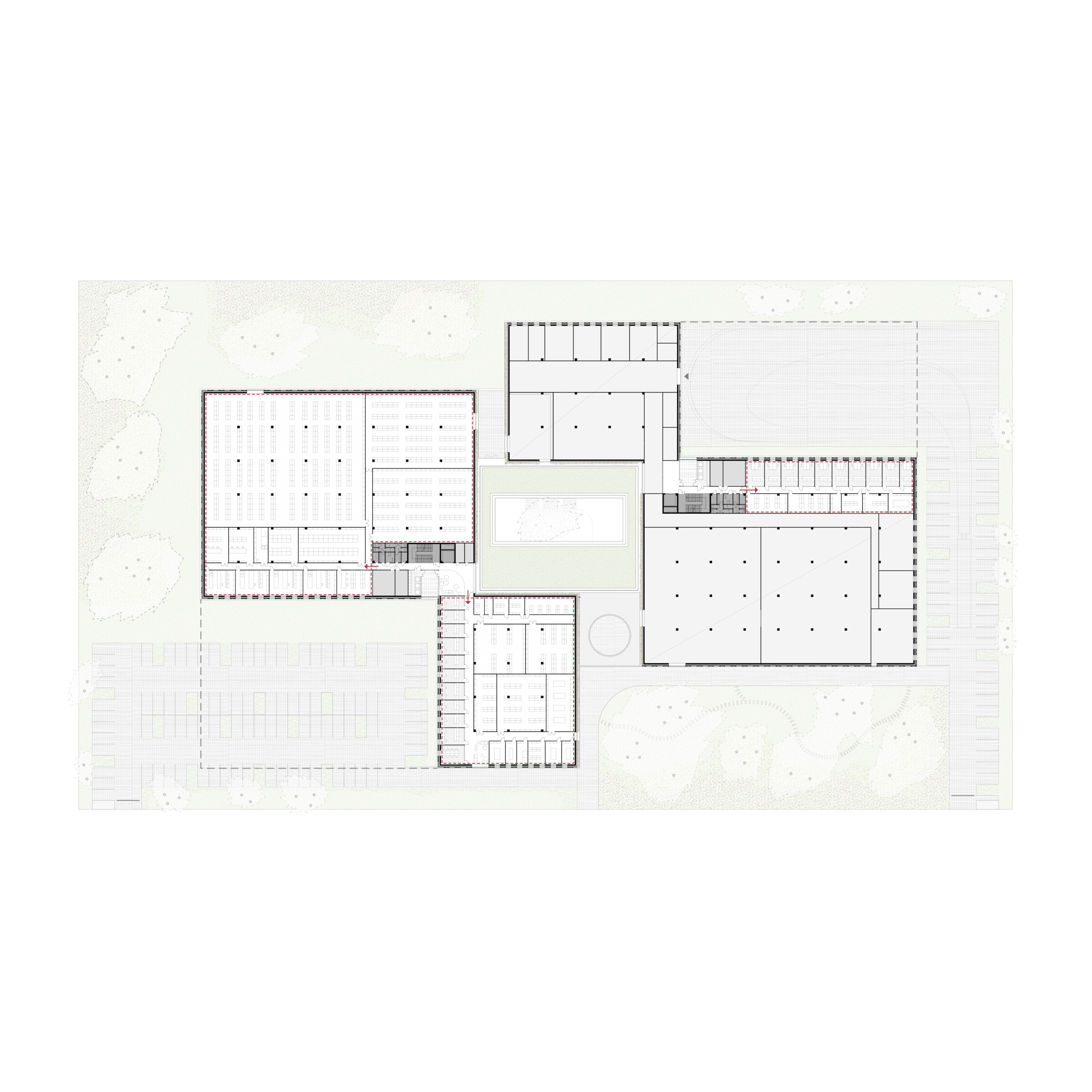
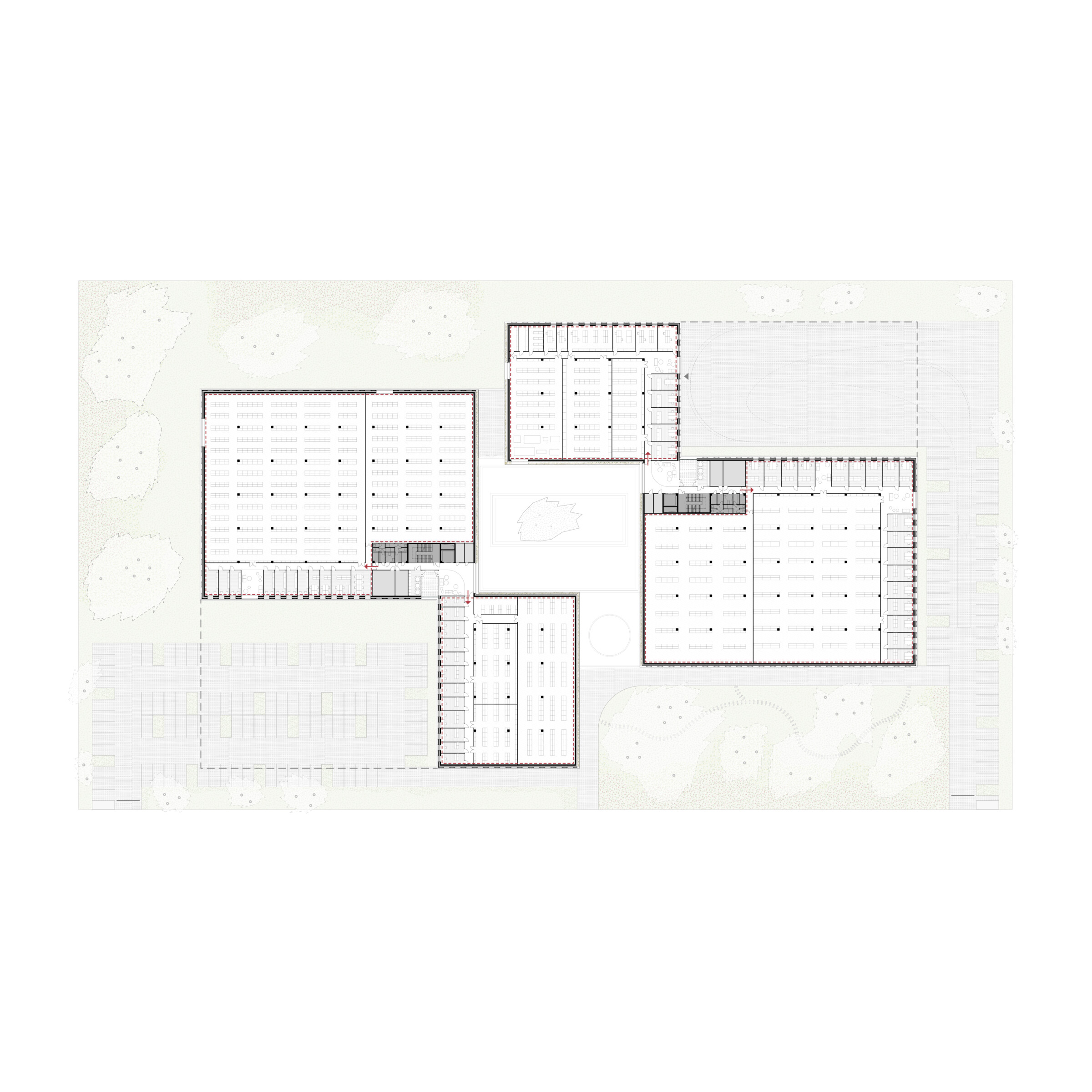
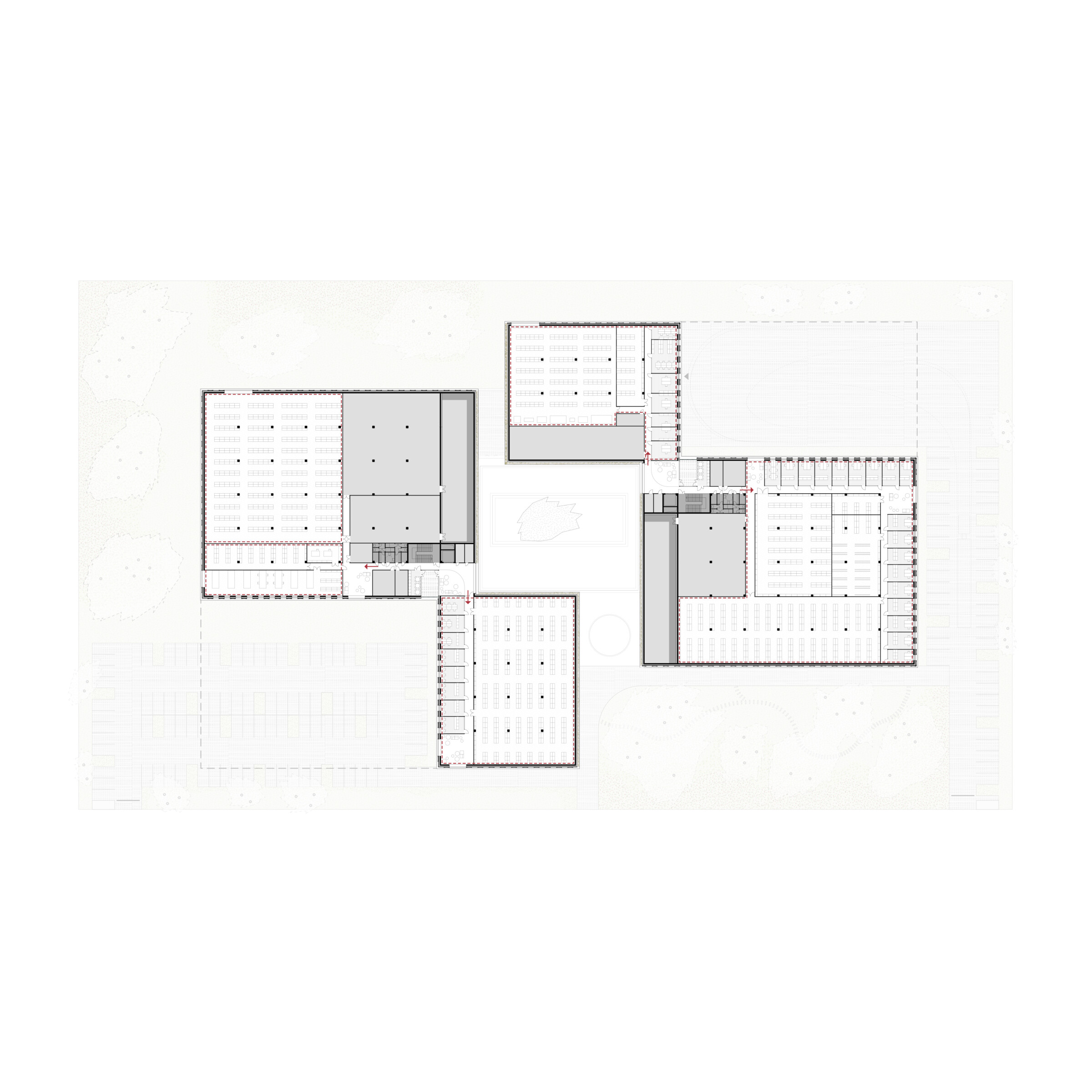
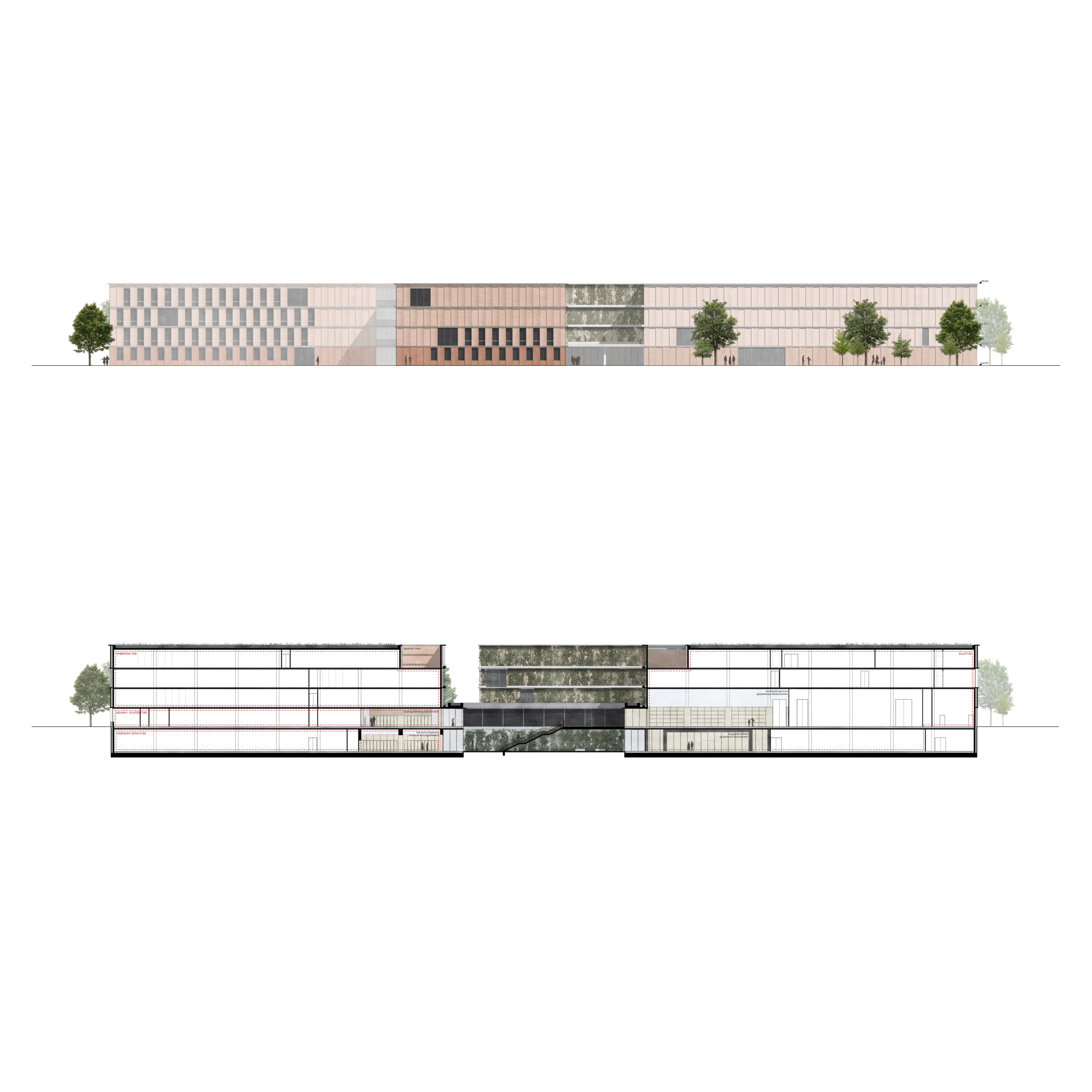
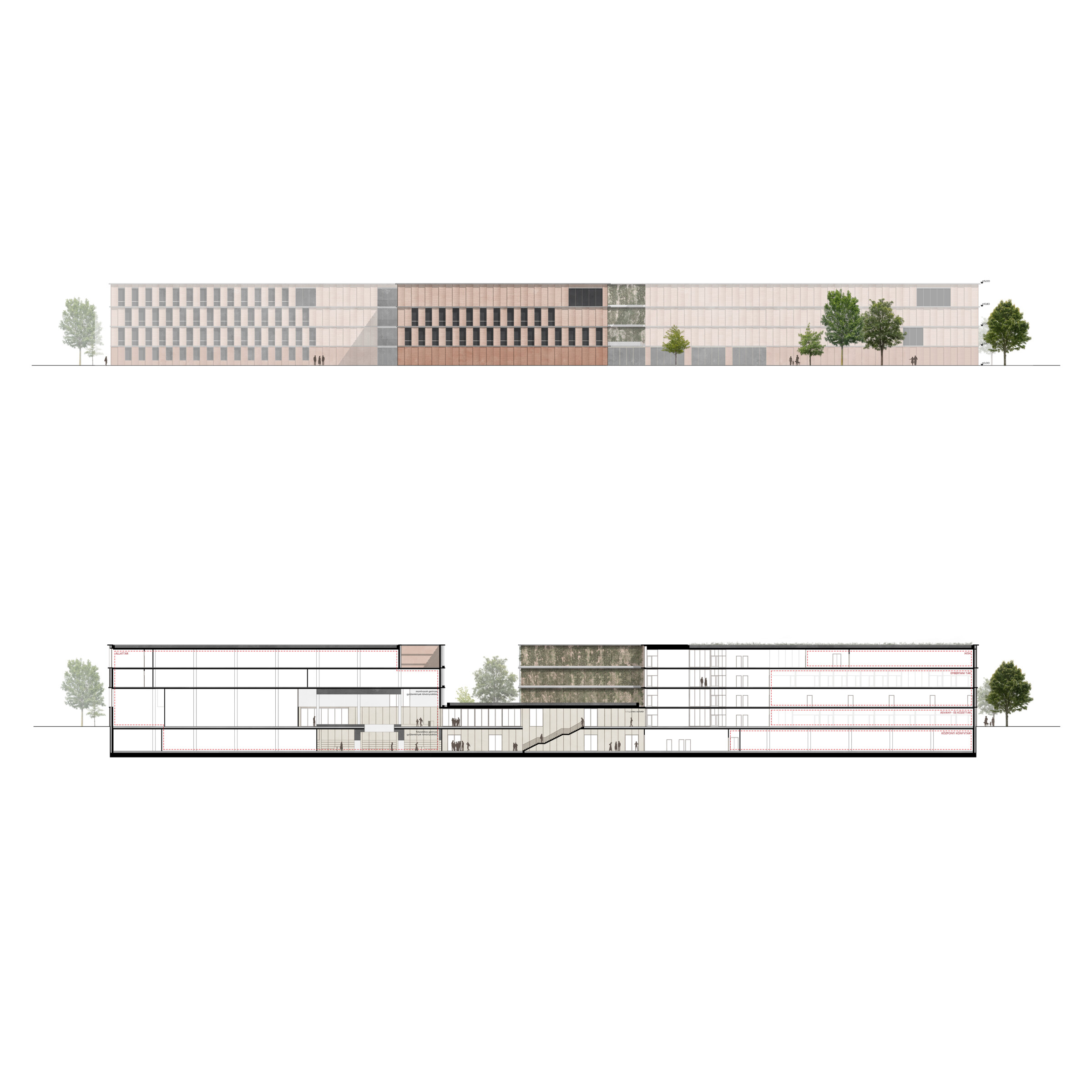
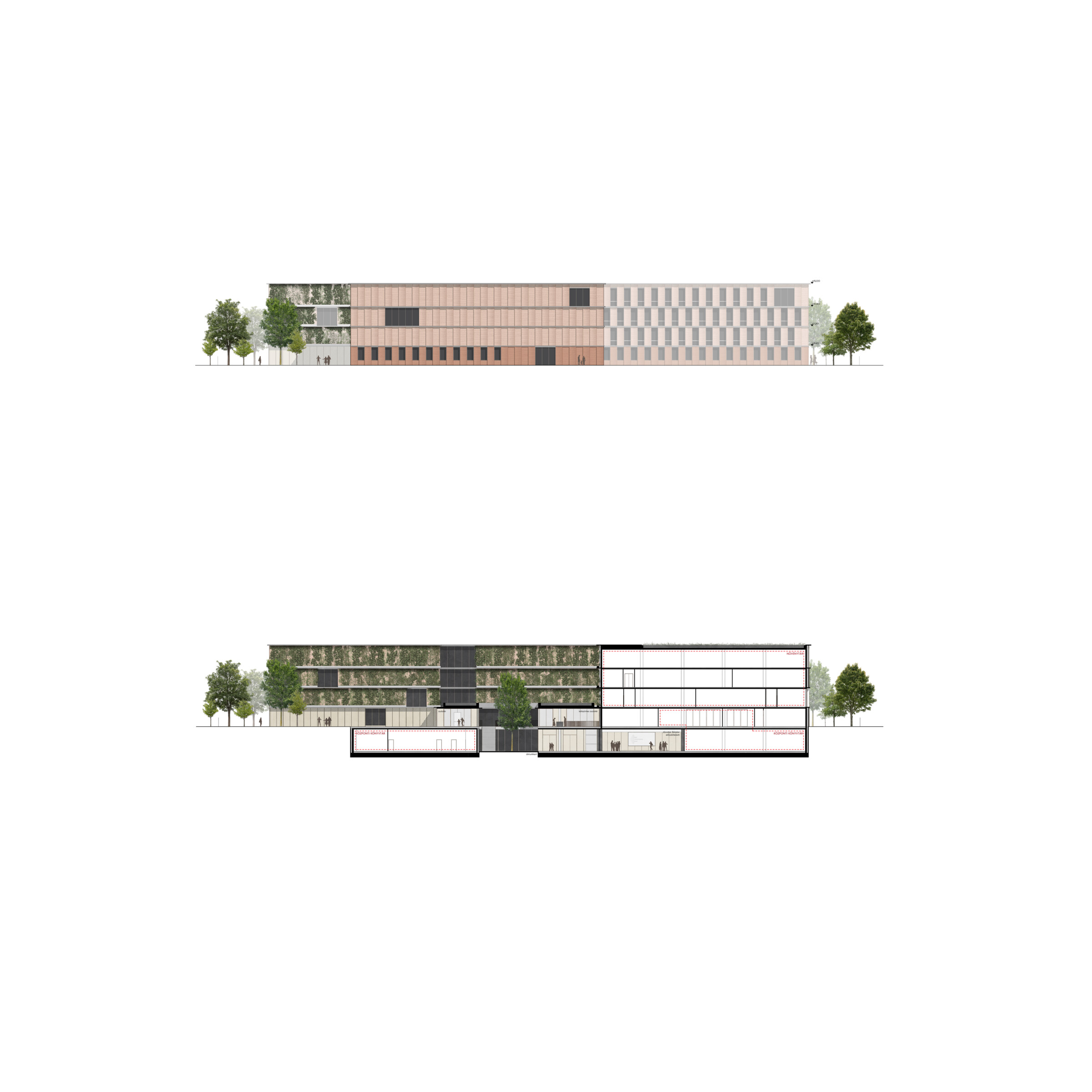
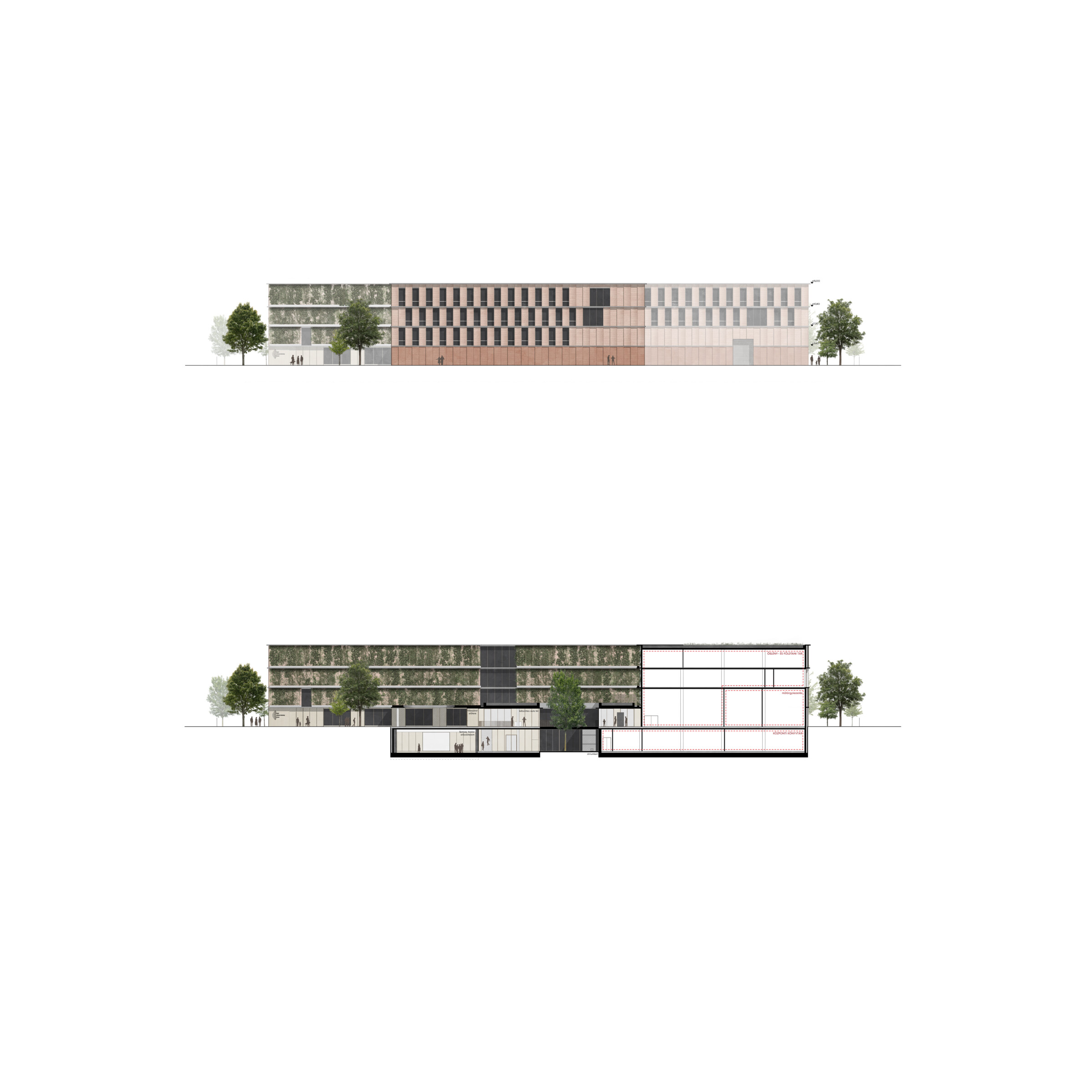
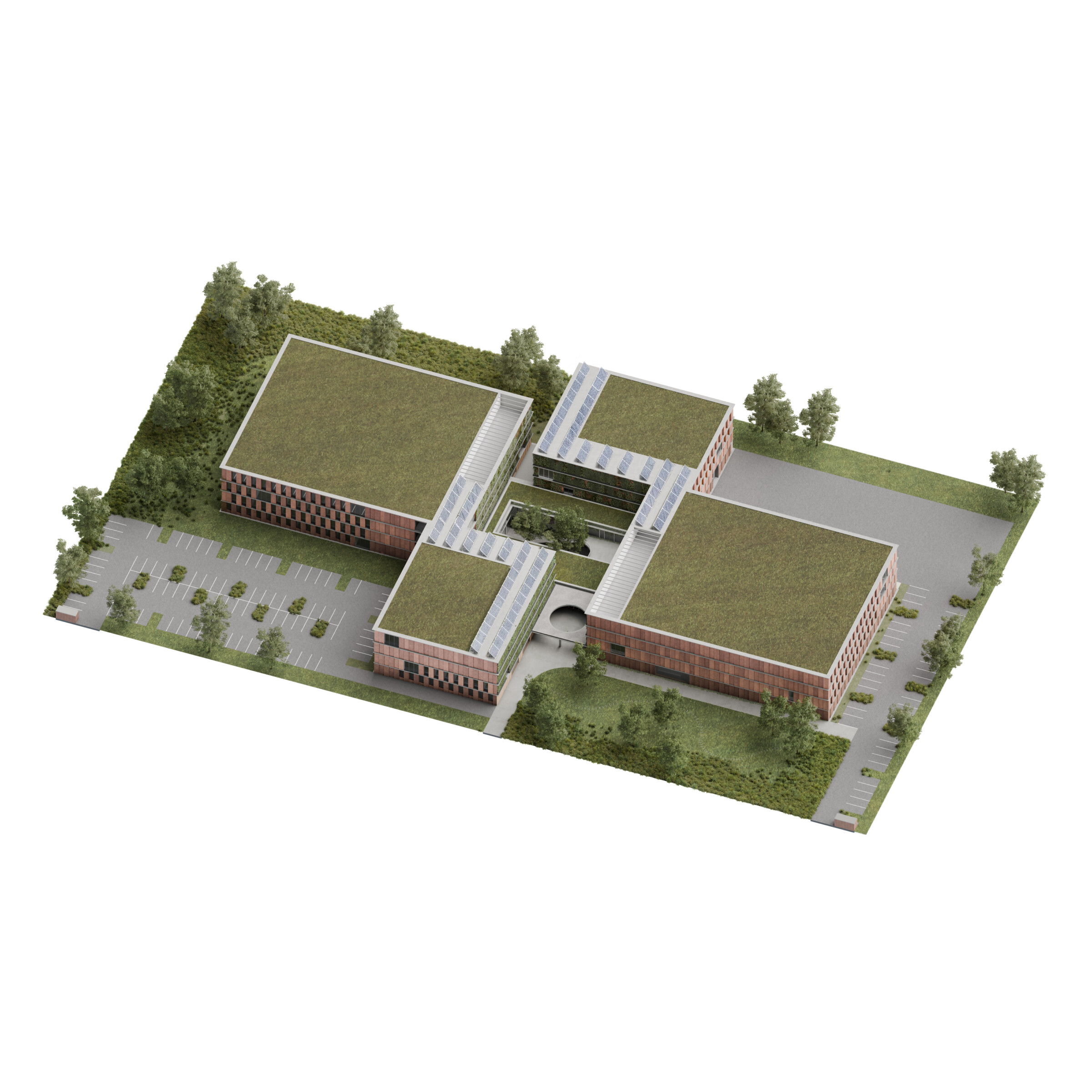
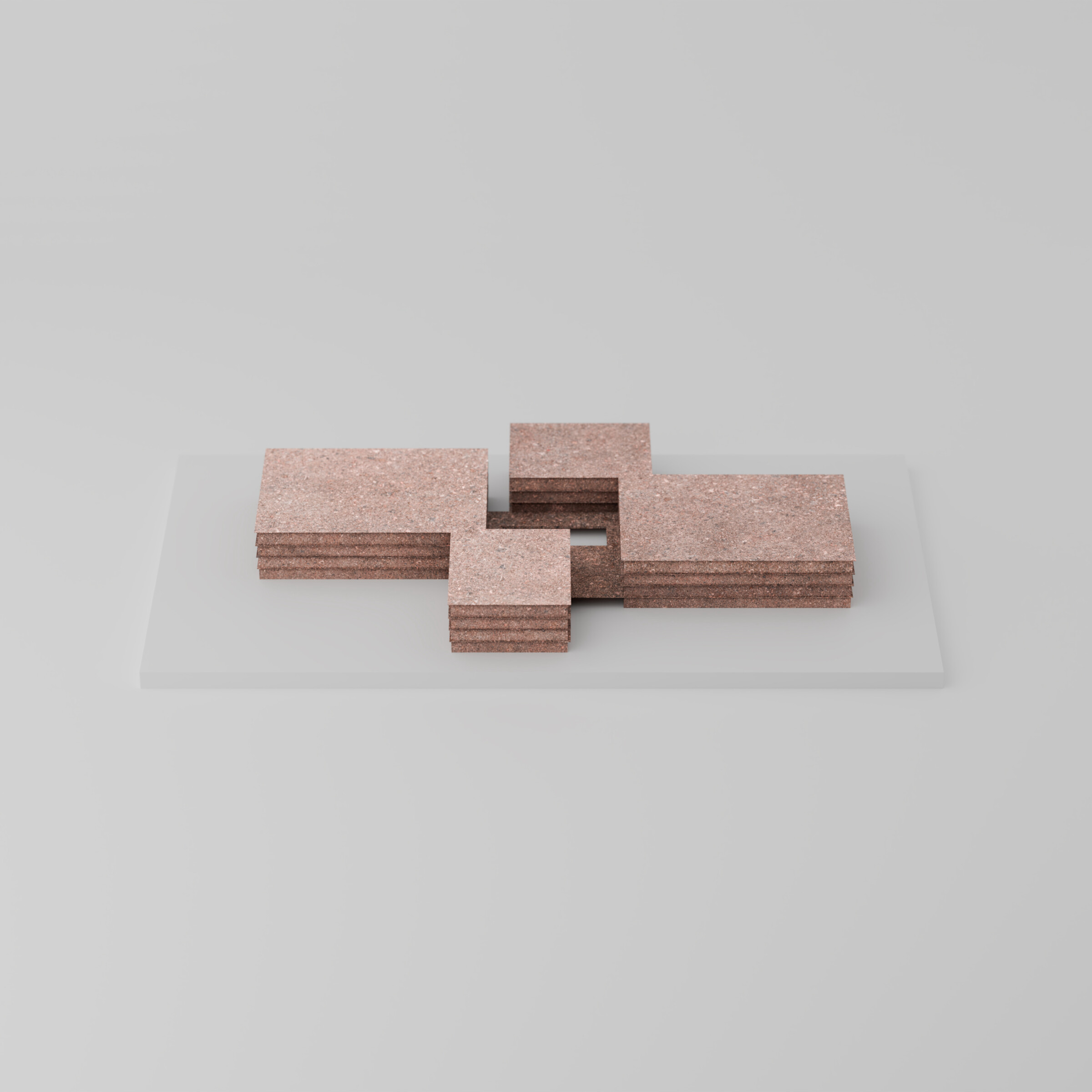
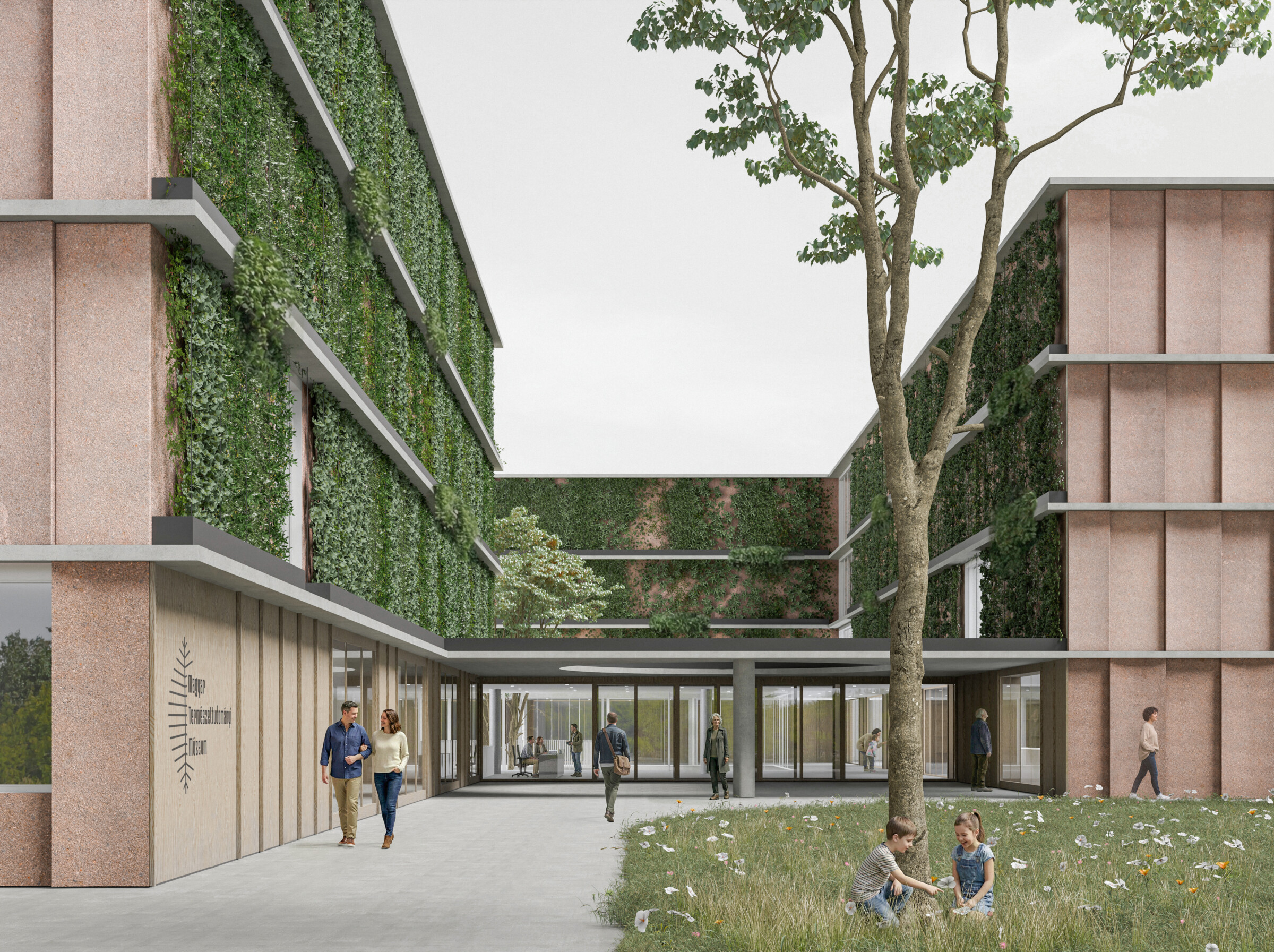
1. Building with a loose mass: we have placed the large-scale program in several smaller-scale wings, resulting in a fragmented composition. The different masses create garden areas with different functions around the building: a forecourt, public parking and service access, staff parking and a rear garden, preserving and emphasizing the public nature of the building and the status of its main entrance and public spaces.
We have summarized the fundamentals of our concept in the following key points:
1. Building with a loose mass: we have placed the large-scale program in several smaller-scale wings, resulting in a fragmented composition. The different masses create garden areas with different functions around the building: a forecourt, public parking and service access, staff parking and a rear garden, preserving and emphasizing the public nature of the building and the status of its main entrance and public spaces.
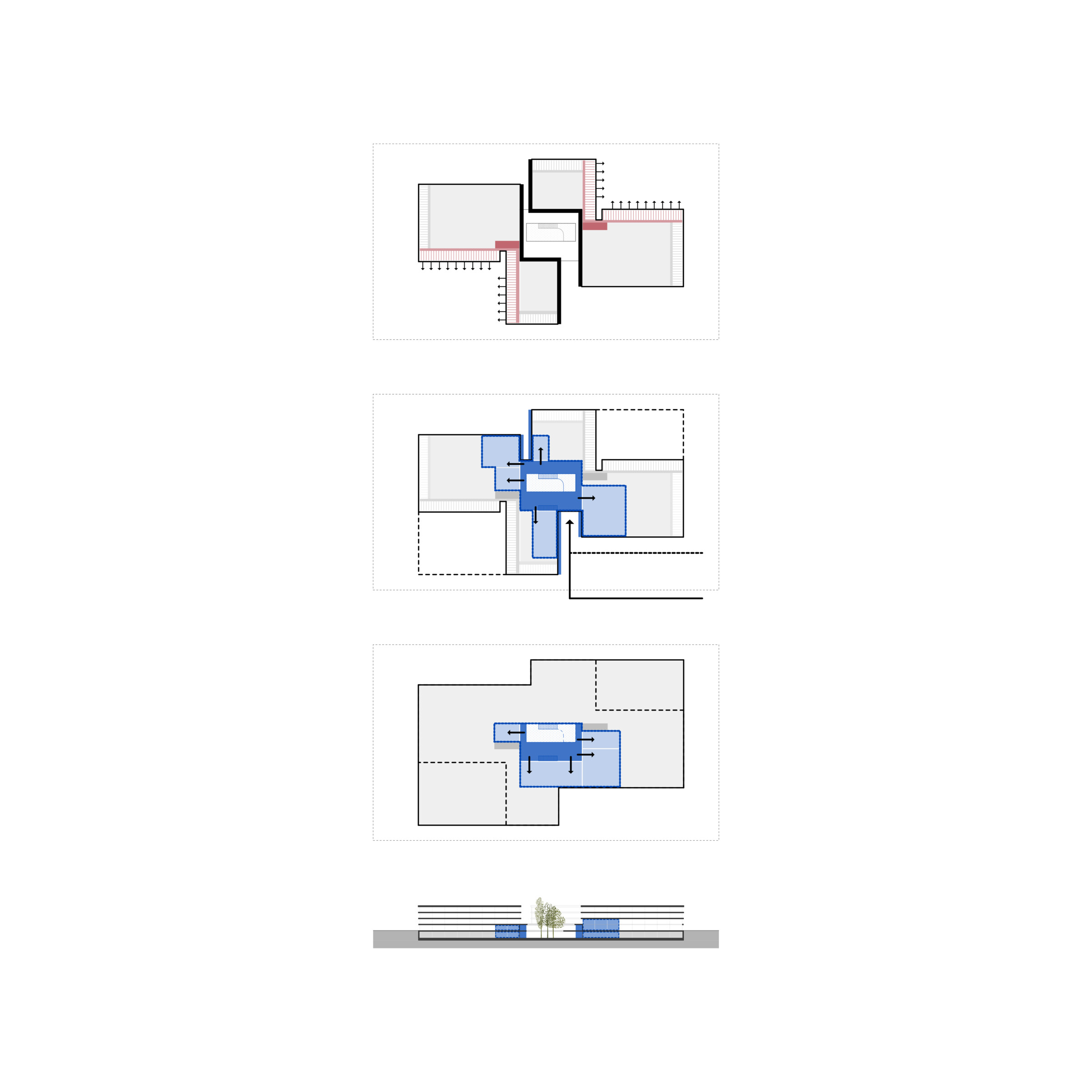
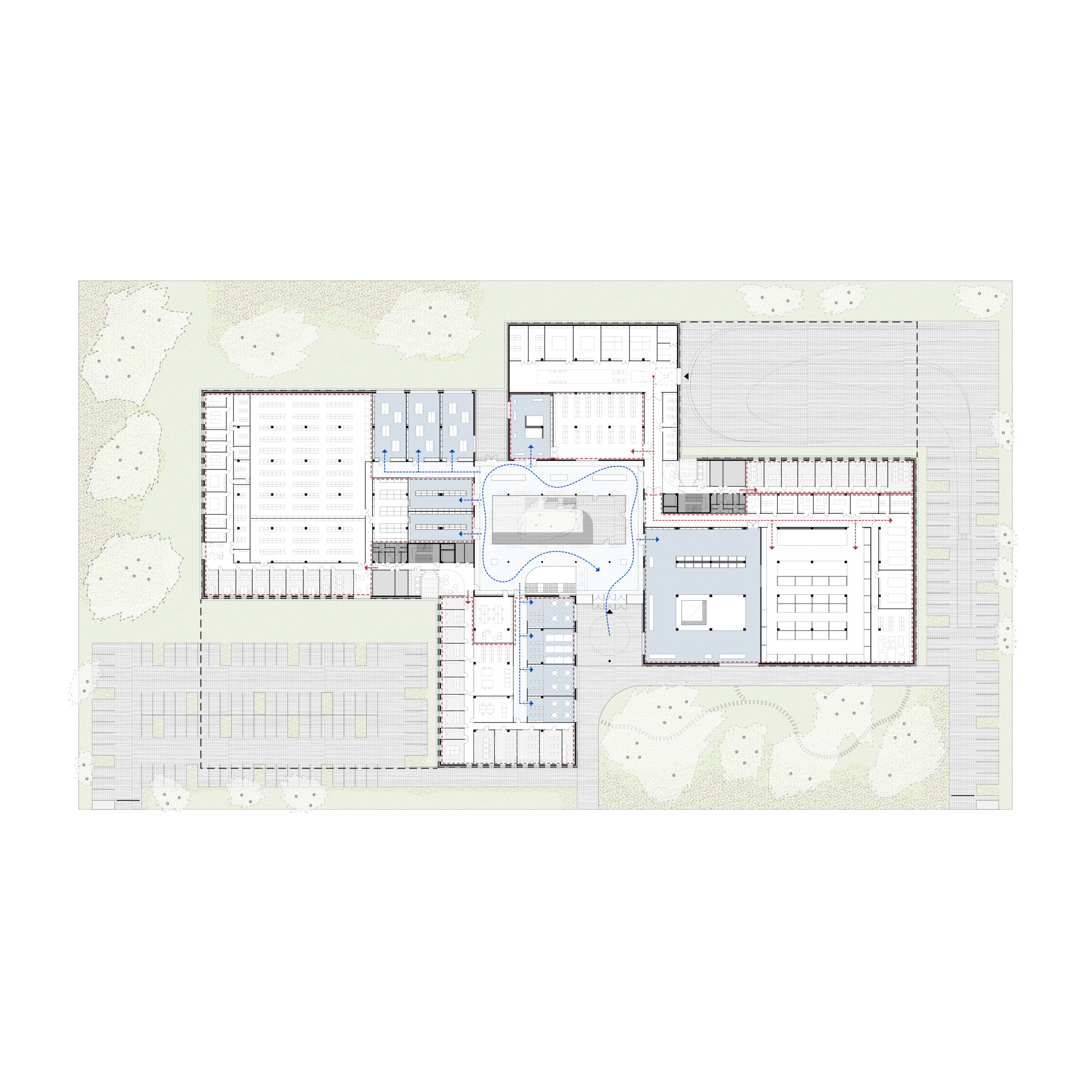
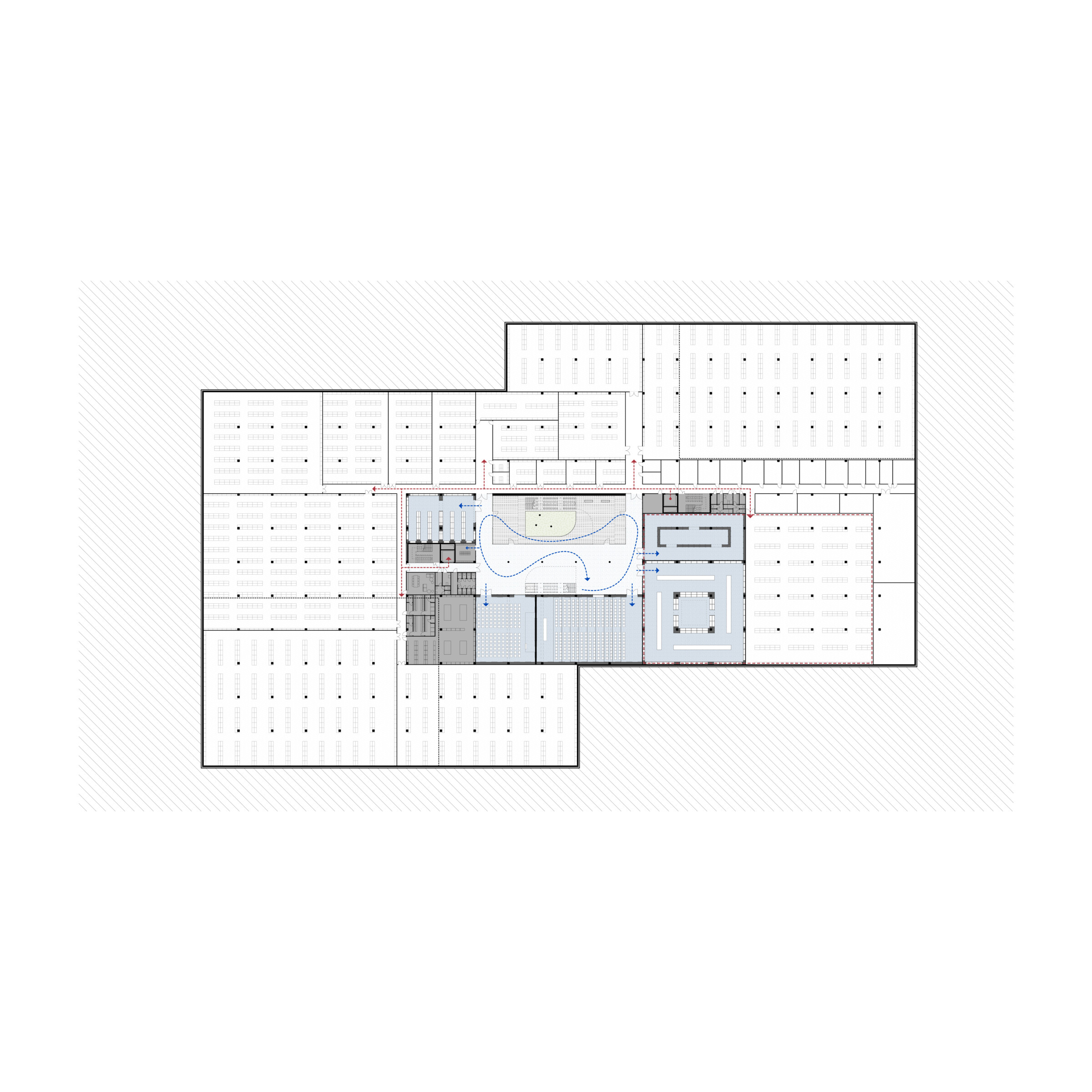
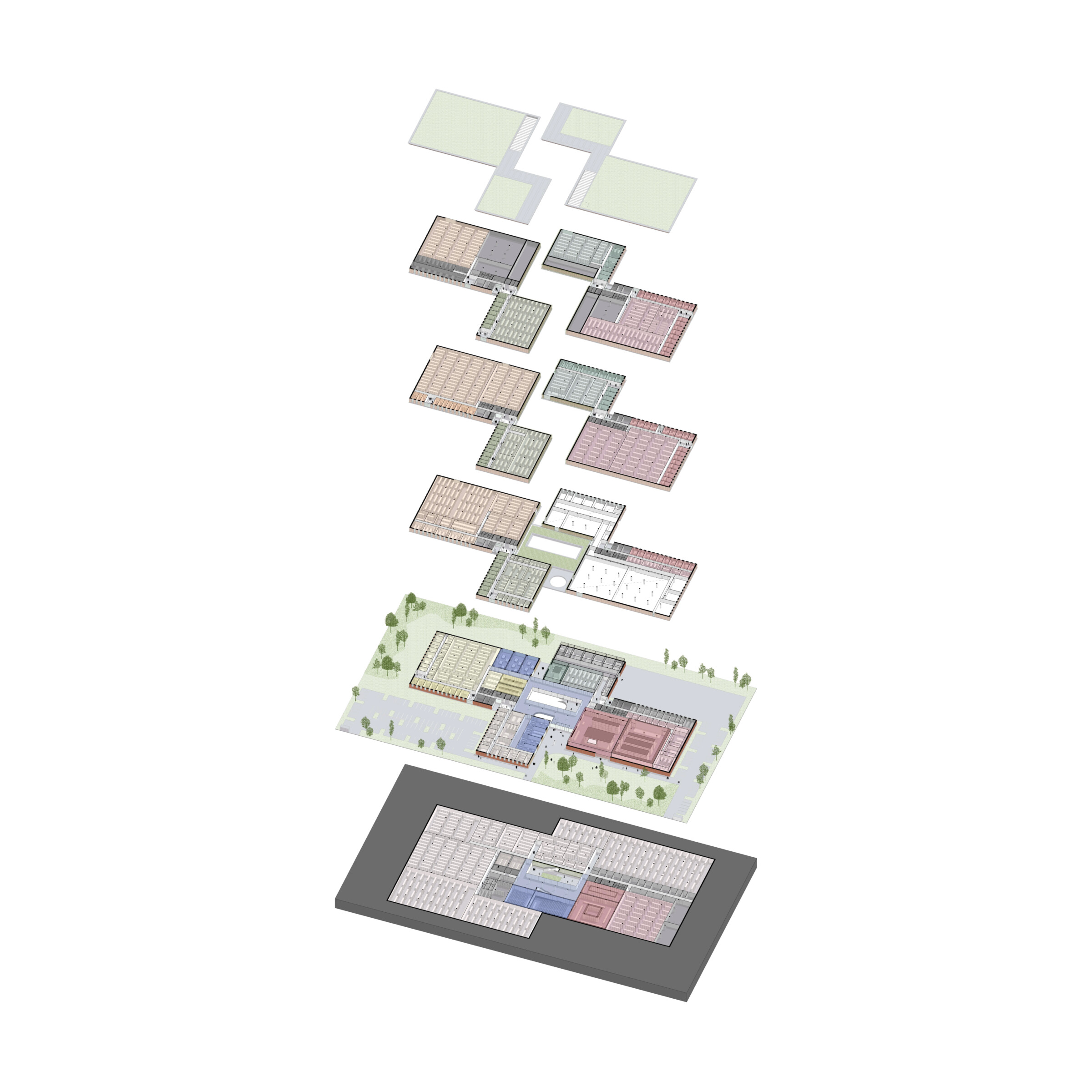
2. Compact design and moderate rationality: in designing the building, we aimed for economical, rational space planning, which is primarily technology-driven, in keeping with a professional research center, and only becomes generous and unique in the most important areas visited by the wider public. The concentration of exhibition spaces and other public areas—understood as intersections of the research base and the knowledge center—takes place on two levels in the heart of the building.
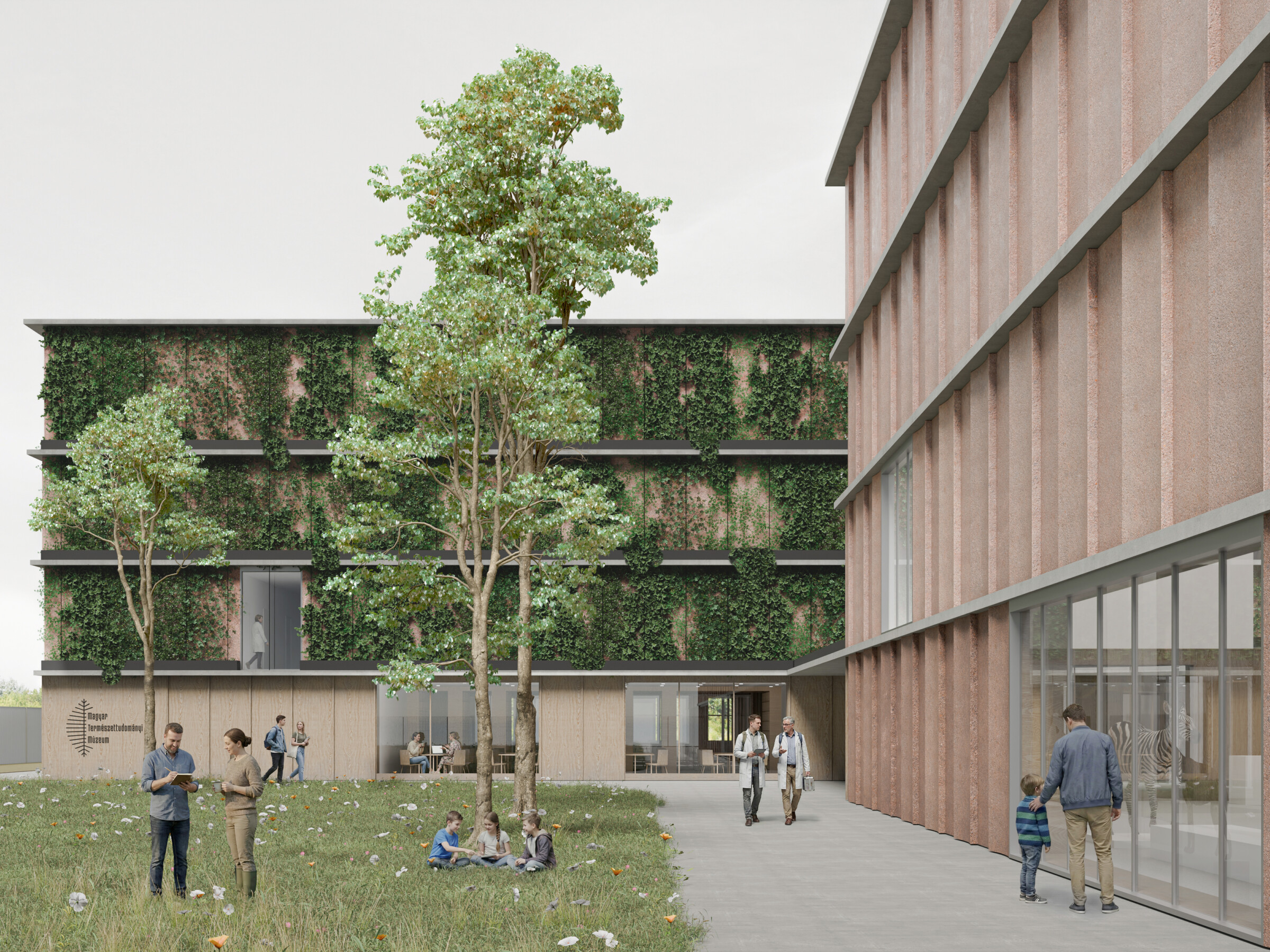
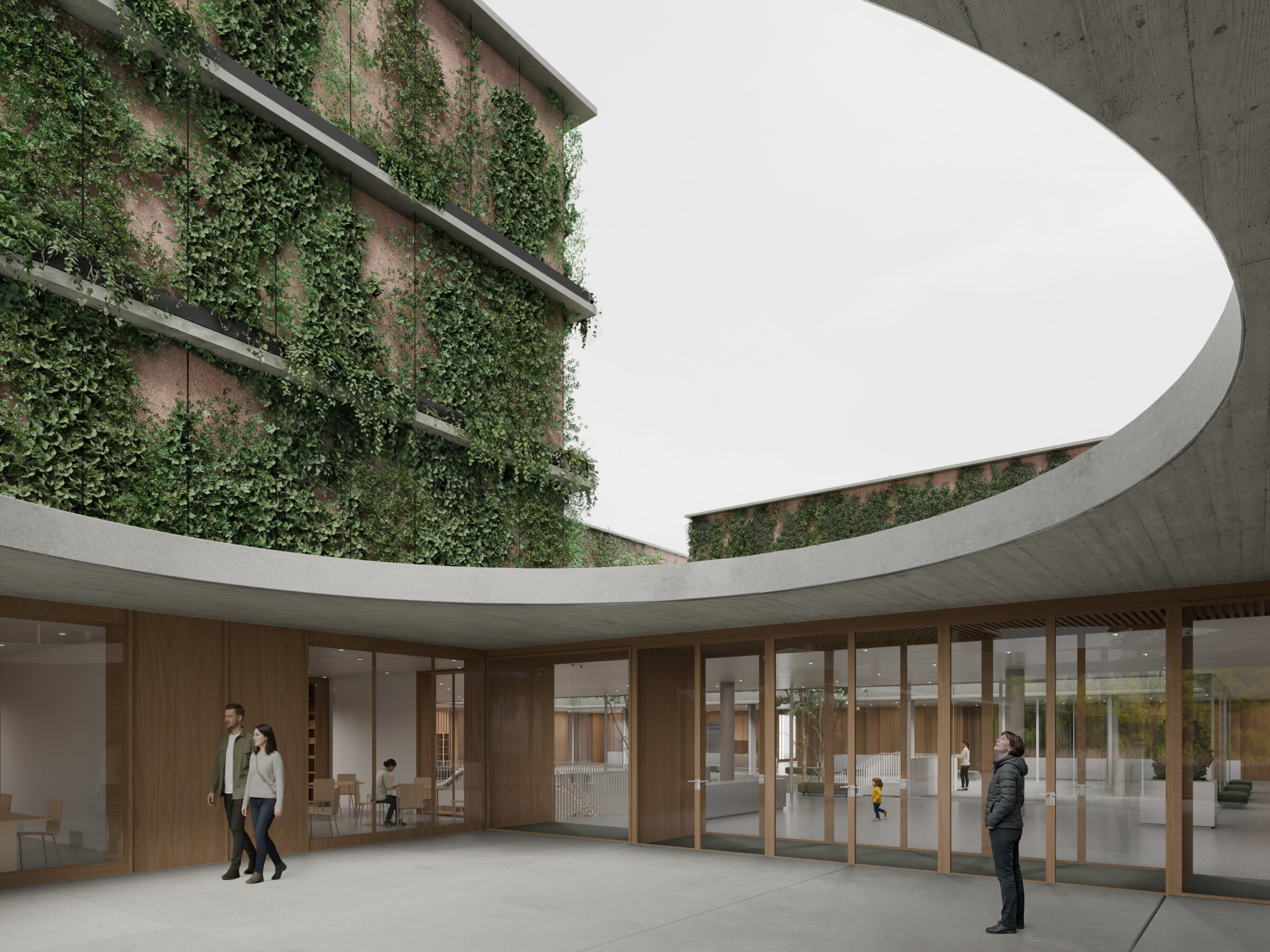
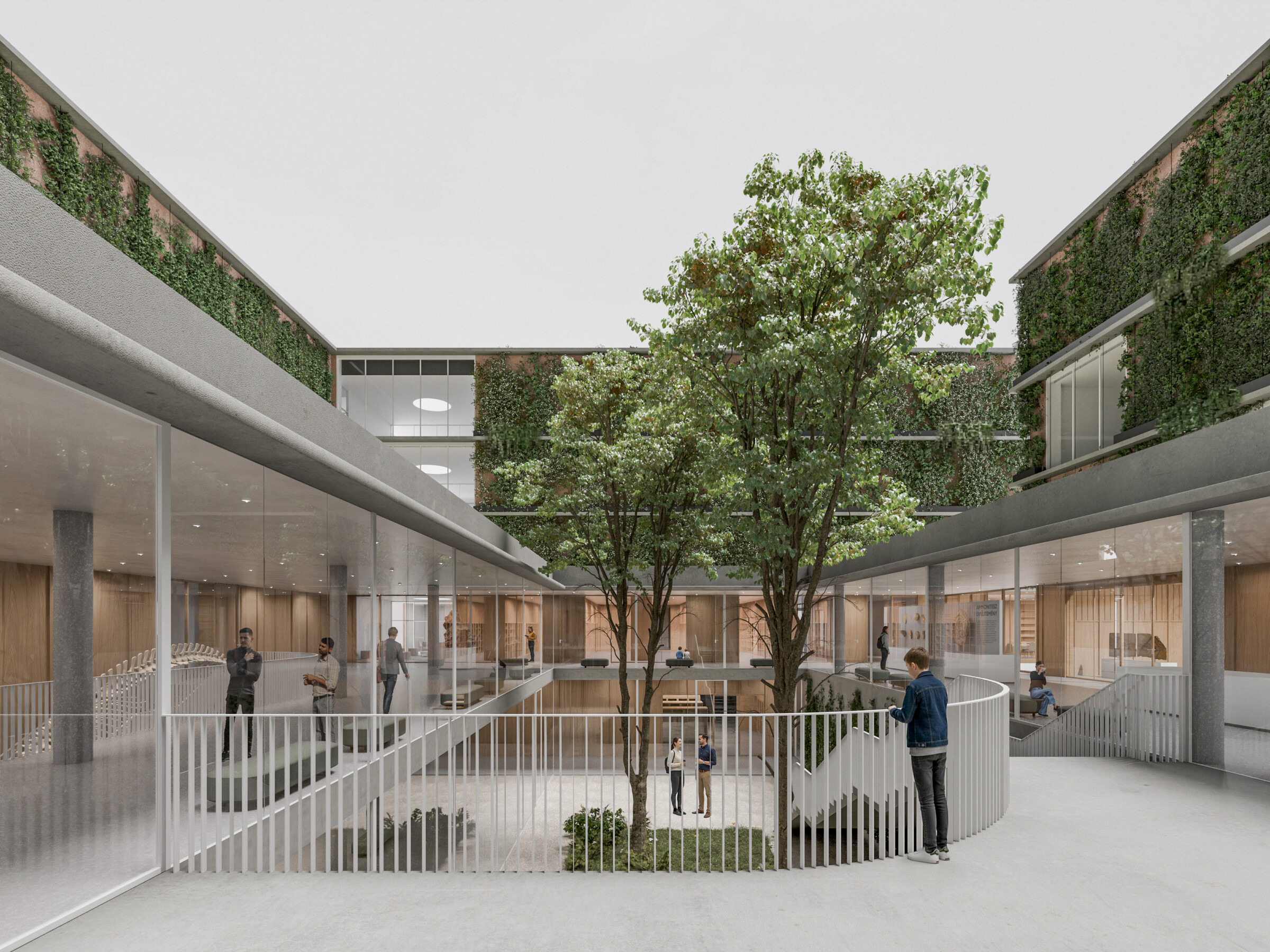
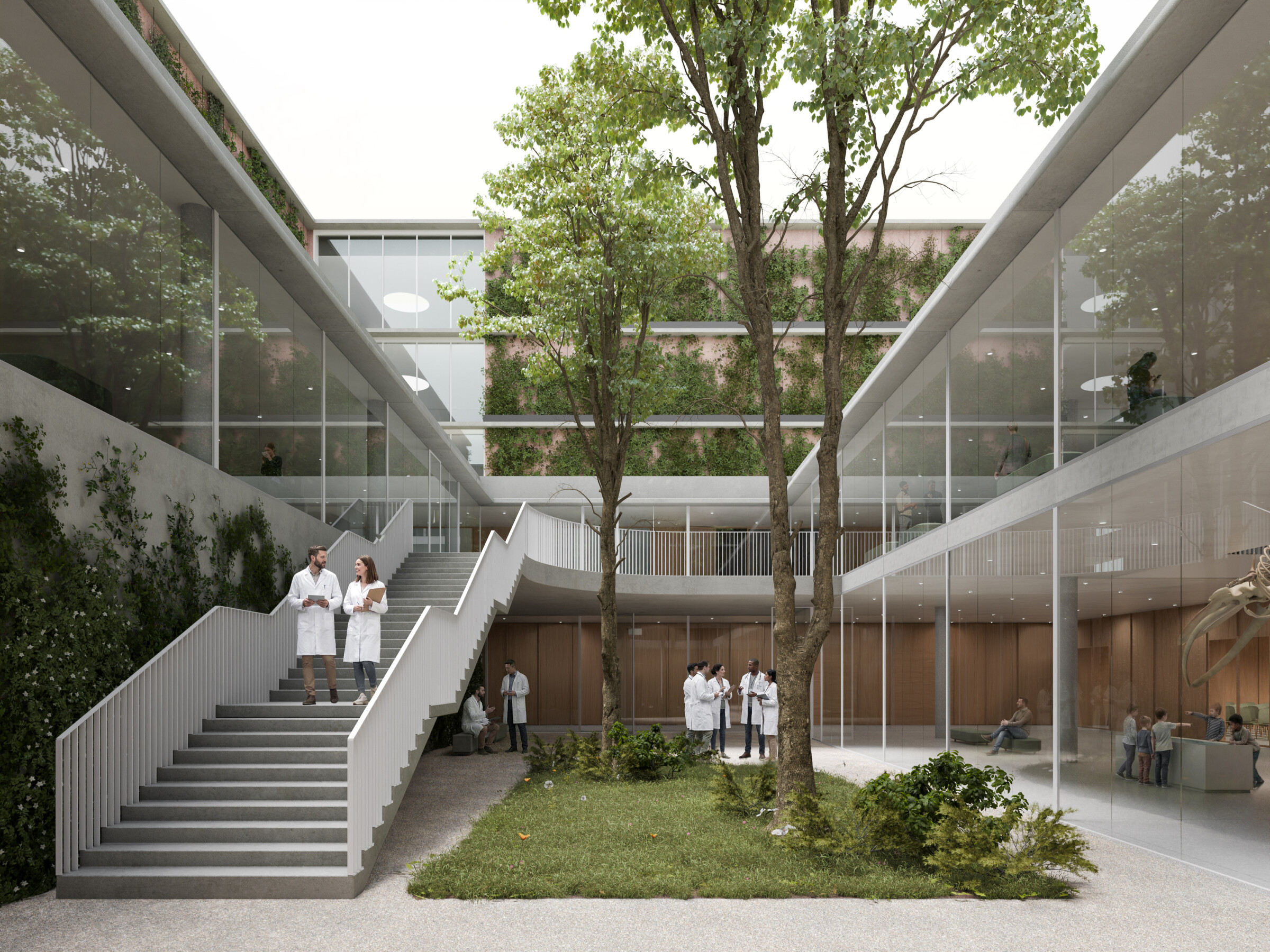
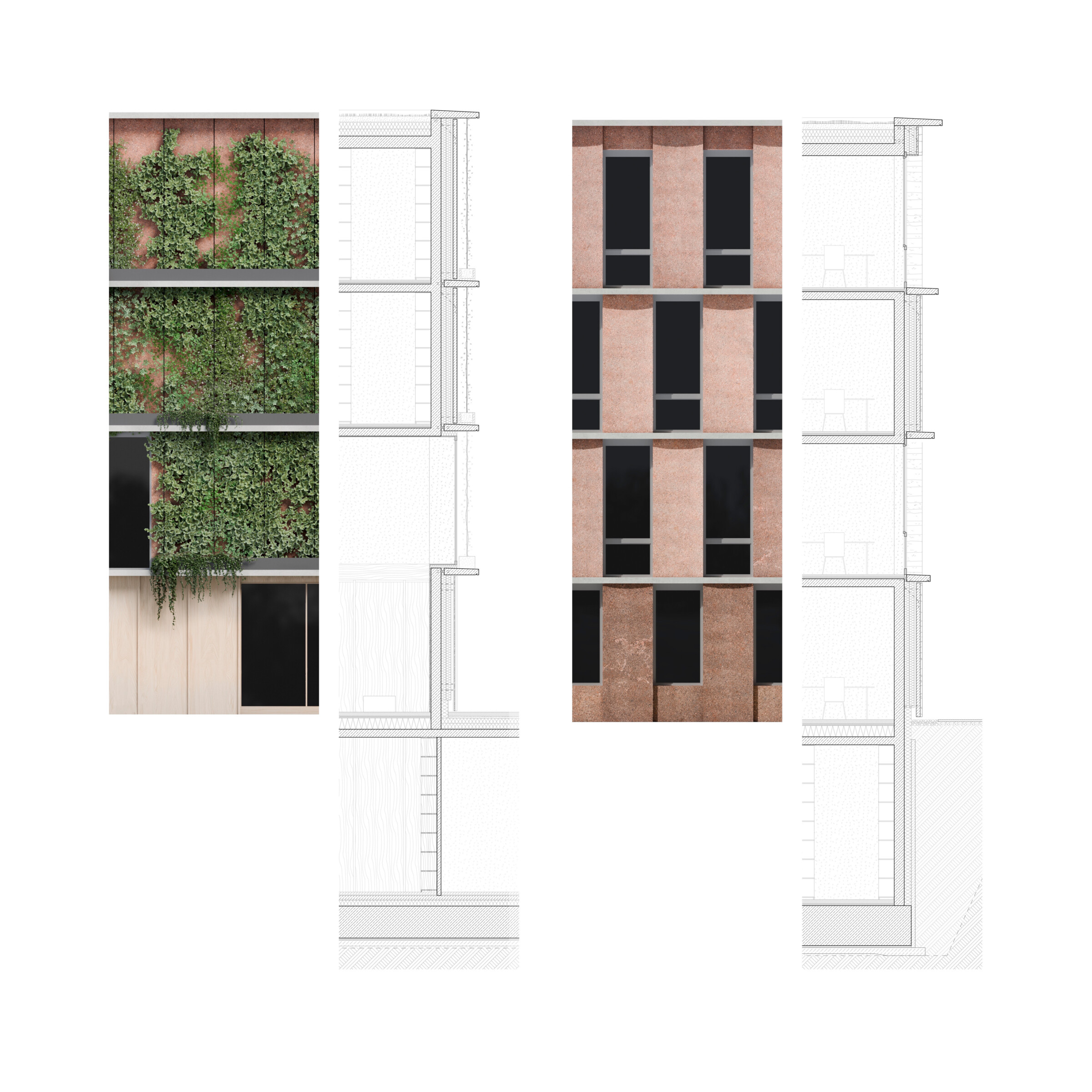
3. The green center of the building complex: the key motif of the entire spatial organization is the concentration and arrangement of the various wings of the building and, in the case of the ground floor and basement, the public spaces around the intensive green atrium created in the center of the building and the surrounding circular lobby. The atrium courtyard organizes the central circulation areas as a kind of green oasis, while the green facade of the two main buildings facing the courtyard also reinforces this, in addition to its climatic effects.
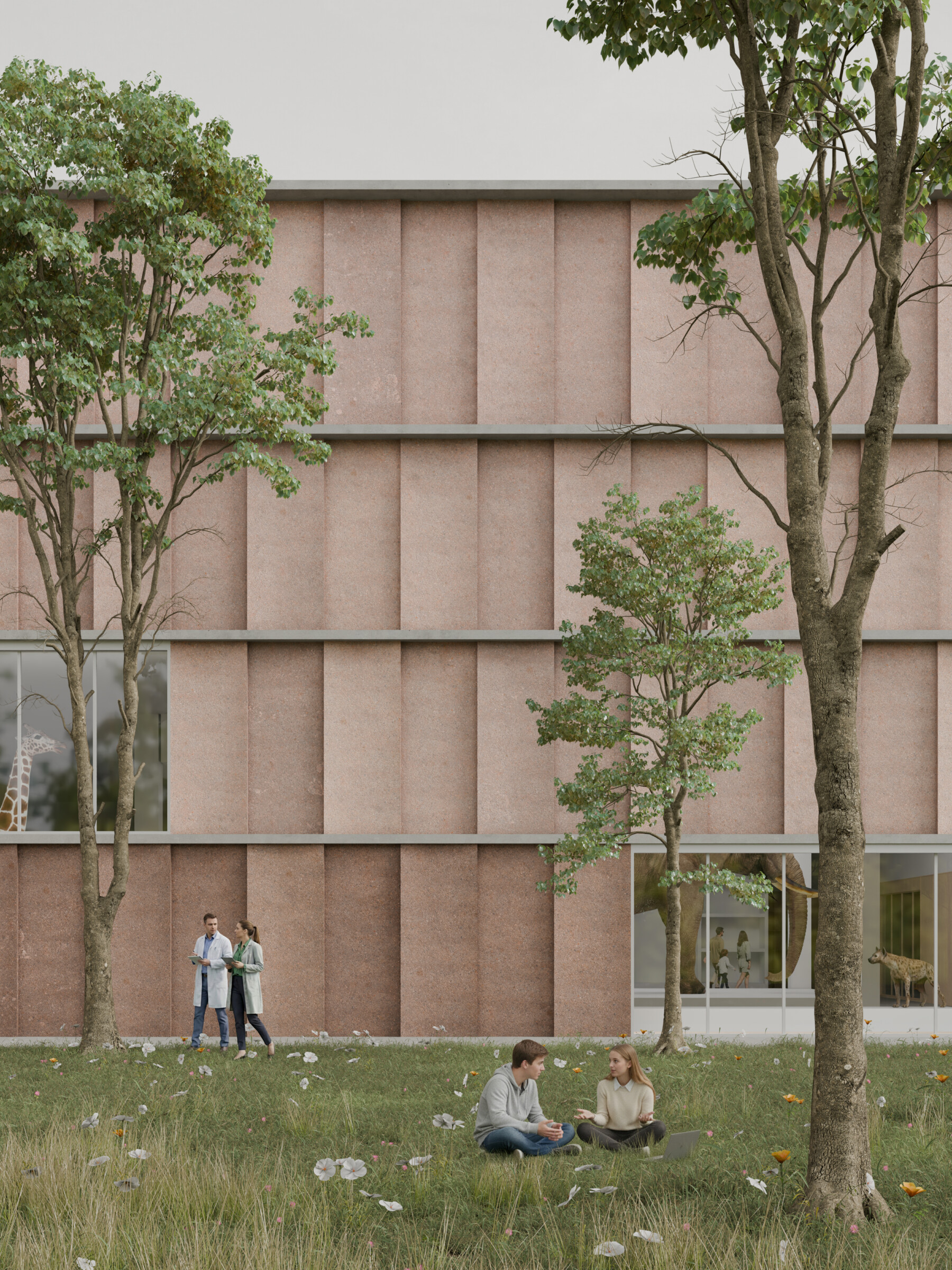
4. Natural materials and sustainable design: we strove to use natural building materials, work phases requiring minimal on-site labor, renewable energy sources, and modern mechanical systems to the extent possible. For example, in addition to prefabricated reinforced concrete structures, we designed facade panels using local clay soil, referring to the memory of the former brick factory nearby, but also to the natural science purpose of the building.
5. Clear functional system: we clearly separated the public traffic, storage, and research areas. The various warehouses and smaller units were organized into clearly defined independent blocks, adapted to the different needs of these space groups (ceiling height, spatial connections, natural lighting, etc.).